
Mixed Methods
Lecturer: Manfred Max Bergman
Modality: Online
Week 1: 10 - 14 August 2026
Workshop Contents and Objectives
Mixed methods research, the intentional integration of qualitative and quantitative research components in a single research design, has emerged as a third research “paradigm” beyond qualitative and quantitative designs. In this workshop, participants will gain insight into basic and advanced aspects of integration of qualitative and quantitative approaches through personalized, focused activities. The workshop consists of five parts. Part one will cover research design issues, theoretical assumptions, and justifications for mixed methods. The second and third parts will deal with qualitative and quantitative perspectives on mixed methods research. The fourth part will explore practical problems and solutions to mixed methods research, including newer developments associated with complex mixed methods designs, integration, joint displays, and publication strategies for mixed methods projects. In an advanced session, relations between mixed methods research and implementation science will also be covered. The final part will consist of a presentation where participants will apply workshop materials in a small group project. The workshop will include lectures, exercises, assignments, and group work. At the completion of the workshop, participants will have acquired knowledge about fundamental and advanced issues in mixed methods research. Participants engaged in a mixed methods research project are invited to work on their project as part of the course. A limited number of consultations are available, and a course reader will be provided.
The precise course content will be adapted to the interests, skills, and background of the participants. In the past, courses included:
- MMD background (historical developments; justifications for MMR; nomenclature; MM vs. triangulation vs. multimethod research)
- QL vs/& QN (characteristics of QL and QN revisited; philosophy of science dimension of mixed methods; MM and pragmatism
- Research design and MMD (research purpose, objectives, goals, questions, and hypotheses; basic MMR designs; advanced MM justifications; MMR notation)
- Core and complex MMR designs (exploratory sequential designs; explanatory; sequential designs; convergent/concurrent/parallel designs; complex designs)
- Qualitative-oriented and quantitative-oriented MMR designs
- Data collection and sampling in MMR (mixed data collection; sampling and MM; integration through sampling; timing of QL and QN data collection and analysis; relationship between QN and QL during data collection)
- Integration (conceptualization; integration opportunities and strategies; reasons for disintegration)
- Joint displays
- Advanced topics: Hermeneutic Content Analysis; MM and transdisciplinary research; MM and implementation science
- Current developments and the future of MM
- MM presentation and publication strategies
Prerequisites
Familiarity with the basics of qualitative and quantitative methods.
What our participants appreciated most
"For anyone thinking of doing Mixed Methods | cannot recommended enough. The professors were very open to discuss our research interests and concerns. They created a very agreable environment to exchange around concerns we might have. | wish I could've taken this course earlier on my research, so | would recommended to anyone who is starting to think about their research method plan. Very happy to have attended, really gave me a lot of insights and clarity. So thank you."
"This workshop was amazing. Great balance of theory and practise. Max and Zinette is a great team, both of them are very open, kind and helpful. They can explain difficult topics very clearly. | got so much of new knowledge due to this course. The whole week was such a pleasure, the atmosphere in the class was perfect."
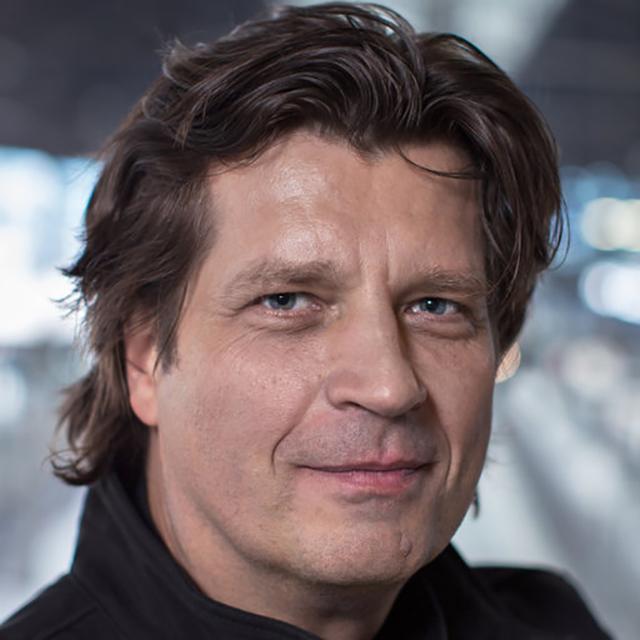
Max Bergman
Chair of Social Research and Methodology, University of Basel, Switzerland
Max Bergman is a Chair of Social Research and Methodology at the University of Basel, Switzerland.
His main research focus is on sustainable business-society relations. He also teaches and publishes on qualitative, quantitative, and mixed methods research. His research projects are currently located in Europe, India, and Singapore.