
The Practice of Survey Design and Implementation
Lecturers: M. Ochsner & A. Pollien
Modality: In presence
Week 2: 17-21 August 2026
Workshop content and objectives
In this workshop, participants will learn how to design and implement a state-of-the-art social science survey project. The instructors will provide first-hand insights into the whole life cycle of a survey project based on their experience spanning from large international general population survey infrastructure projects, such as the European Social Survey, the International Social Survey Programme and the European Values Study, to small-scale project-driven surveys focusing on specific subpopulations. The course will focus on practical aspects and will give hands-on insights into issues that occur in survey projects through practical applications and exercises. The course’s characteristic is that it does not separate methodological questions from substantive/research questions but conceives survey research as a hole, integrating research questions and methodology. The instructors will focus on what the survey methodologists do not publish about and thus prepare the participants to face the different pitfalls and complications a survey project can (and most often will) bring and will offer a toolbox to overcome such issues. The course will complement the methodological literature rather than repeat it. Participants will be well equipped to start their own scientific survey project after having been walked through the life cycle of a survey project in practice.
Workshop design
The workshop will walk participants through the process of designing a survey from the initial idea to the publication of the data. It will, however, not cover the analysis of survey data, there are many other courses on this matter at the Summer School. Each day will focus on several aspects in the life cycle of a social science survey project, consisting of theoretical and practical input and hands-on exercises. Morning sessions will consist of sessions of short input presentations and short exercises, while afternoon sessions will consist of group work applying what has been discussed in the morning session. The day will end with a short “food for thought” input. Participants can bring their own survey idea(s) to the workshop for the use in some of the group exercises, but the instructors will provide material for exercises for those without an own project.
Detailed Lecture Plan (daily schedule)
| Day 1 – Introduction: Design of survey |
Introduction into surveys:
Survey Life Cycle
Statistical basics of survey research
|
| Day 2 – Questionnaire design |
From research questions to survey questions
Elements of a questionnaire
Recurring issues
|
| Day 3 – Fieldwork preparation |
Cross-cultural / cross-language issues in survey research
Translation of surveys
Fieldwork design and preparation
|
| Day 4 – Questionnaire testing |
Testing questions
Testing surveys
|
| Day 5 – Data preparation and publication |
Data preparation:
Documentation
Data publication:
|
Prerequisites
The course addresses researchers who want to improve their knowledge on survey design and to acquire or deepen their skills in survey implementation. No particular knowledge is required except for a basic understanding of quantitative social research using survey data and basic knowledge on the notion of probability. All levels of expertise, from PhD students to senior researchers, are welcome.
Recommended readings
- Biemer, P. P. (2010). Total Survey Error: Design, Implementation, and Evaluation. Public Opinion Quarterly, 74(5), 817–848. https://doi.org/10.1093/poq/nfq058
- Groves, R. M. & Peytcheva, E. (2008). The Impact of Nonresponse Rates on Nonresponse Bias: A Meta-Analysis. Public Opinion Quarterly, 72(2), 167–189. https://doi.org/10.1093/poq/nfn011
- Harkness, J. A. (2003). Questionnaire Translation. In: Harkness, J. A., van de Vijver, F. and Mohler, P. Ph. (eds.). Cross-cultural Survey Methods (pp. 35-56). John Wiley and Sons.
- Harkness, J. A., van de Vijver, F., Johnson, T. (2003). Questionnaire Design in Comparative Research. In: Harkness, J. A., van de Vijver, F. and Mohler, P. Ph. (eds.). Cross-cultural Survey Methods (pp. 19-34). John Wiley and Sons.
- Kruskal, W. H. & Mosteller, F. (1979a). Representative Sampling, I: Non-Scientific Literature. International Statistical Review / Revue Internationale de Statistique, 47(1), 13. https://doi.org/10.2307/1403202
- Kruskal, W. H. & Mosteller, F. (1979b). Representative Sampling, II: Scientific Literature, Excluding Statistics. International Statistical Review / Revue Internationale de Statistique, 47(2), 111. https://doi.org/10.2307/1402564
- Lipps, O., Herzing, J. M. E., Pekari, N., Ernst Stähli, M. Pollien, A., Riedo, G., Reveilhac, M. (2019). Incentives in surveys. FORS Guide No. 08, Version 1.1. Swiss Centre of Expertise in the Social Sciences (FORS). doi:10.24449/FG-2019-00008
- Ochsner, M. (2021). Representativeness of Surveys and its Analysis. FORS Guide No. 15, Version 1.0. Swiss Centre of Expertise in the Social Sciences (FORS). doi: 10.24449/FG-2021-00015.
- Pollien, A., Herzing, J. M. E., & Antal, E. (2020). Preparation of survey data. FORS Guide No. 13, Version 1.0. Swiss Centre of Expertise in the Social Sciences (FORS). doi:10.24449/FG-2020-00013
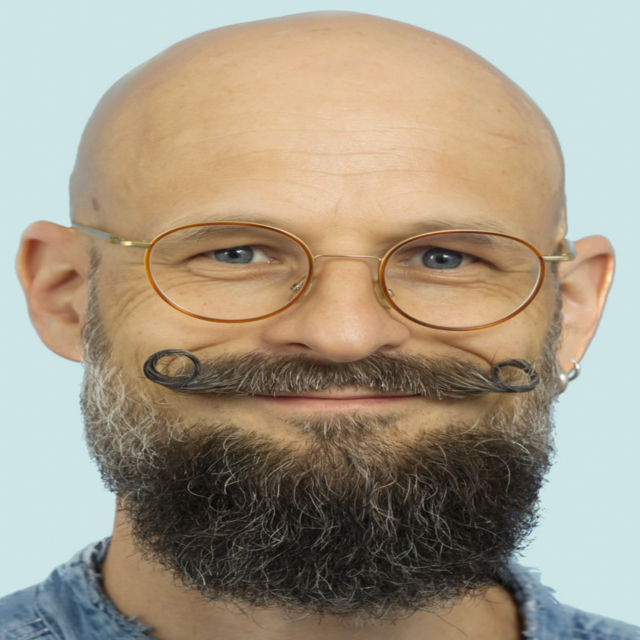
Michael Ochsner
FORS
Michael Ochsner is an international and interdisciplinary scholar specialised in survey methodology, social policy as well as science policy and research evaluation. He studied sociology, environmental sciences and social pedagogy and holds a PhD in Sociology of the University of Zurich. He worked at ETH Zurich, University of Zurich, University of Lausanne and has been working as senior researcher at FORS since 2013. He is Chair of the Scientific Committee of the European Values Study, President of the European Network for Research Evaluation in the Social Sciences and Humanities ENRESSH, member of the Editorial Advisory Panel of Nature’s Humanities and Social Science Communications, in the Editorial Advisory Board of Research Evaluation and in the Scientific Advisory Board on Research Assessment of the Swiss Academy of Sciences. He is involved in the implementation of the European Social Survey, European Values Study and the International Social Survey Programme in Switzerland. He has directed or participated in numerous survey projects from expert surveys, Delphi surveys, small population surveys and general population surveys on a broad range of topics such as Attitudes towards Climate Change, Values, Welfare State, Scholars’ Perception of Research Quality, Attitudes towards Open Science and Open Research Data. He taught courses or summer/winter schools at University of Lausanne, University of Vilnius, Ss. Cyril and Methodius University of Skopje, and Università della Svizzera italiana.

Alexandre Pollien
FORS
Alexandre Pollien is a sociologist specialising in social theory, normativity, the sociology of education, and the sociology of the family. He studied at the Universities of Lausanne and Geneva and holds a PhD in Sociology from the University of Lausanne. Since 2008, he has been a researcher at FORS, where he contributes to international surveys such as the European Social Survey (ESS) and the International Social Survey Programme (ISSP), and is responsible for the fieldwork of MOSAiCH in Switzerland. His main research interests in survey methodology include nonresponse, epistemology of survey measurement, and data cleaning and preparation.