
An Introduction to Bayesian Methods for the Social Sciences
Lecturers: Antonietta Mira & Francesco Denti
Modality: In-presence
Week 2: 17-21 August 2026
Workshop contents and objectives
Bayesian statistics has experienced a surge in popularity over the last few decades, primarily due to the computational advancements that have mitigated its traditionally perceived complexity. The progressive expansion of the Bayesian method has allowed practitioners to embrace its intuitive, probabilistic reasoning and leverage its flexibility in formulating elaborate models for real-world data.
This course aims to give participants a simple but rigorous foundation of Bayesian Statistics. Our program is designed to start from the fundamental concepts and progress to developing simple and advanced models explicitly tailored for applications in the social sciences.
The course will cover essential topics, starting with the basics of Bayesian inference, including posterior distribution, estimation, credible intervals, and hypothesis testing. Moving forward, we will explore specific areas such as:
- Regression Models and Variable Selection: We will discuss the basic regression models and then discuss the use of priors for variable selection.
- Models for Network Data: We will delve into the application of Bayesian statistics for modeling and interpreting network data, providing insights into the dynamics of interconnected systems.
- Model-Based Clustering: This section will cover model-based clustering, a technique crucial for segmenting complex datasets into homogeneous groups. This approach facilitates a nuanced understanding of patterns within diverse datasets.
Workshop design
The course is carefully structured to maintain a balanced approach, incorporating both theoretical classes and hands-on practical laboratories. This dual strategy aims to provide participants with a comprehensive understanding of the reliability and practical applications of Bayesian statistics. Engaging in both theoretical concepts and practical applications will enable attendees to gain valuable insights into the theory and the real-world applicability of Bayesian statistical techniques.
More specifically, during the theoretical classes, the basics of Bayesian modeling will be covered, and essential methods will be introduced and described. For each topic, we will draw parallels with the more common frequentist statistics, highlighting differences in methodology and interpretation and the pros and cons of the two alternative approaches. The laboratory sessions will utilize the R software and serve two primary purposes. First, they will consolidate the understanding of theoretical concepts. Second, they will provide hands-on guidance for using R and its dedicated packages to implement, fit, and interpret Bayesian models with social science data. Students are strongly encouraged to bring their own data for analysis, which will be used for practical, real-world examples and discussion. The results will be presented by the students in front of the class and jointly discussed.
Detailed lecture plan (daily schedule) tentative
| Day 1 – Monday (all day) | Introduction to the Bayesian modeling framework. The concepts of priors and posterior distributions. Some notable examples of conjugate priors: inference on proportions (Bernoulli model) and means (Gaussian model). |
| Day 2 – Tuesday |
Morning
Afternoon
|
| Day 3 – Wednesday |
Morning
Afternoon
|
| Day 4 - Thursday |
Morning
Afternoon
|
| Day 5 – Friday |
Morning
Afternoon
|
Prerequisites
Participants should have a foundation in probability theory and linear regression. Familiarity with frequentist inference - including point estimation, hypothesis testing, and confidence intervals - is also expected. Proficiency in R is essential for the successful completion of the course.
Recommended readings or preliminary materials
- Alicia A. Johnson, Miles Q. Ott, Mine Dogucu, “Bayes Rules! An Introduction to Applied Bayesian Modeling”, ISBN 9780367255398 by Chapman & Hall https://www.bayesrulesbook.com
What our participants appreciated most
"| really liked it. The instructors were very responsive and took the flow based on the students. This requires the audience to be experienced and active learners though. From a non-mathematical background, | was able to follow and catch up with the course due to the active learning style, and I've benefited a lot."
"The workshop met my expectations by providing detailed explanations of Bayesian statistics, from its basic concepts to more advanced methods, and demonstrating how they can be applied to the social sciences. | particularly enjoyed the hands-on examples that we implemented in R Studio with the guidance of the instructors and support from colleagues."
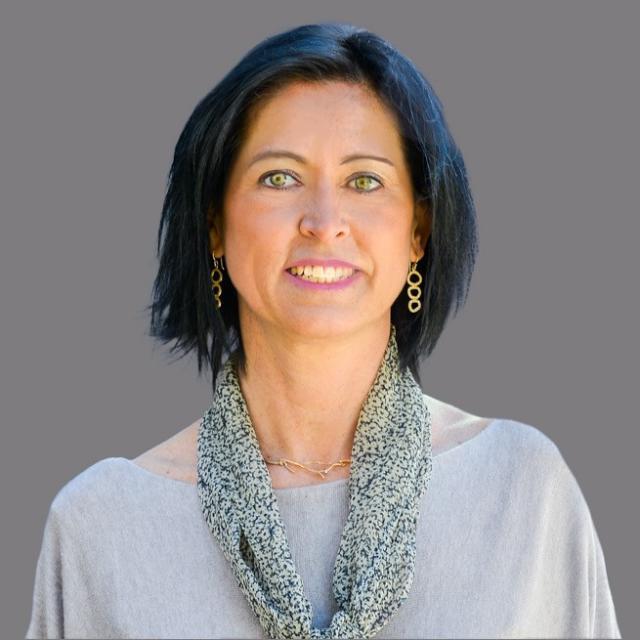
Antonietta Mira
Professor of statistics, founder and director of the Data Science Lab, Università della Svizzera italiana, Switzerland
Antonietta is professor of statistics, founder and director of the Data Science Lab at Università della Svizzera italiana, (Lugano) where she served as the Vice-Dean in the Faculty of Economics (2013–2015). She is also adjunct professor at University of Insubria (Como, Italy) and has been nominated fellow of the Institute of Mathematical Statistics and of the International Society for Bayesian Analysis. She is member of the board of the Swiss Office of Federal Statistics and of the Swiss Statistical Society, and of the Harvard Data Science Review.
Her current research focuses on Bayesian statistics and data science, with a clear interdisciplinary scope with applications to social sciences, life sciences, finance and economics.
She has won awards for excellence in both research and teaching. Antonietta is also involved in public outreach both as an organizer of events and as a speaker and through the media is engaged in the strengthening of the culture of data science.
She is the principal investigator on several projects at the Swiss National Science Foundation and a member of multiple scientific committees representing her areas of expertise.

Francesco Denti
Department of Statistics, University of Padua, Italy
Francesco is a Senior Assistant Professor (Rtd-B) at the Department of Statistics of the University of Padua. Previously, he held the role of Assistant Professor (Rtd-A) at the Department of Statistics of Università Cattolica del Sacro Cuore in Milan. Prior to that, he spent two years as a Postdoctoral Scholar at the Department of Statistics of the University of California - Irvine (UCI).
Francesco obtained a Ph.D. in Statistics at the University of Milan - Bicocca and Università della Svizzera italiana (joint program, awarded with honors).
His research is focused on the application of Bayesian methodologies to complex datasets. In particular, he is interested in Bayesian mixtures, Bayesian nonparametric, model-based clustering, shrinkage priors, and dimensionality reduction.